


"In every place there is a story that should not be forgotten." – E.F.
History, as it is most often told, tends to favour great names and defining events. Yet beneath that visible surface lies another, quieter layer — one shaped by ordinary lives that, without intention, helped form the world we now inhabit.
In Ossett, a town that today might seem little more than a point on the map, one such story persists. Not through monuments or official records alone, but through fragments that have endured the passage of more than three centuries.
A world before it was remembered
In the late 17th century, Ossett existed within a social and economic landscape markedly different from today. It was a place where work was not organised in factories, but in homes.
Textile production, particularly wool, relied on a domestic system in which each member of the household played a role. Days were long, labour was demanding, and the rhythm of life was defined by necessity rather than recognition.
There was little sense of historical significance in this daily effort. And yet, it was precisely this quiet persistence that laid the foundations for what would later become one of England's most important industrial regions.
A house, a name, a question
Within this setting stood Hassell Hall, a house built around 1690 and associated with the Foster family.
For generations, a seemingly minor detail drew the attention of local historians: a stone lintel bearing the initials F.R.H. alongside the date 1699.
It was visible. Concrete. Undeniable.
And yet, its meaning remained unclear.
As is often the case in historical inquiry, the evidence was present — but without interpretation, it remained incomplete.
When the past answers back
More than two centuries later, and following decades of uncertainty, research led by FOSTER History & Collective Memory, in collaboration with local historians, finally brought clarity.
The initials referred to three names:
Foster. Richard. Hannah.
A simple conclusion, perhaps. But one with consequence.
What had long been an unresolved detail became something else entirely: the restoration of identity to individuals who had, until then, remained anonymous.
The measure of an ordinary life
Richard Foster (c. 1648–1730) does not appear in the major narratives of British history. He was neither a political figure nor a man of renown.
And yet, his life holds meaning.
Contemporary records describe him as a man of faith, devoted to his family and respected within his community. His experience reflects that of countless individuals whose labour sustained local economies during periods of profound transformation.
His death in 1730, recorded as the result of strangulation, introduces an unsettling element, a reminder that the past is not always transparent, nor fully understood.
What time does not erase
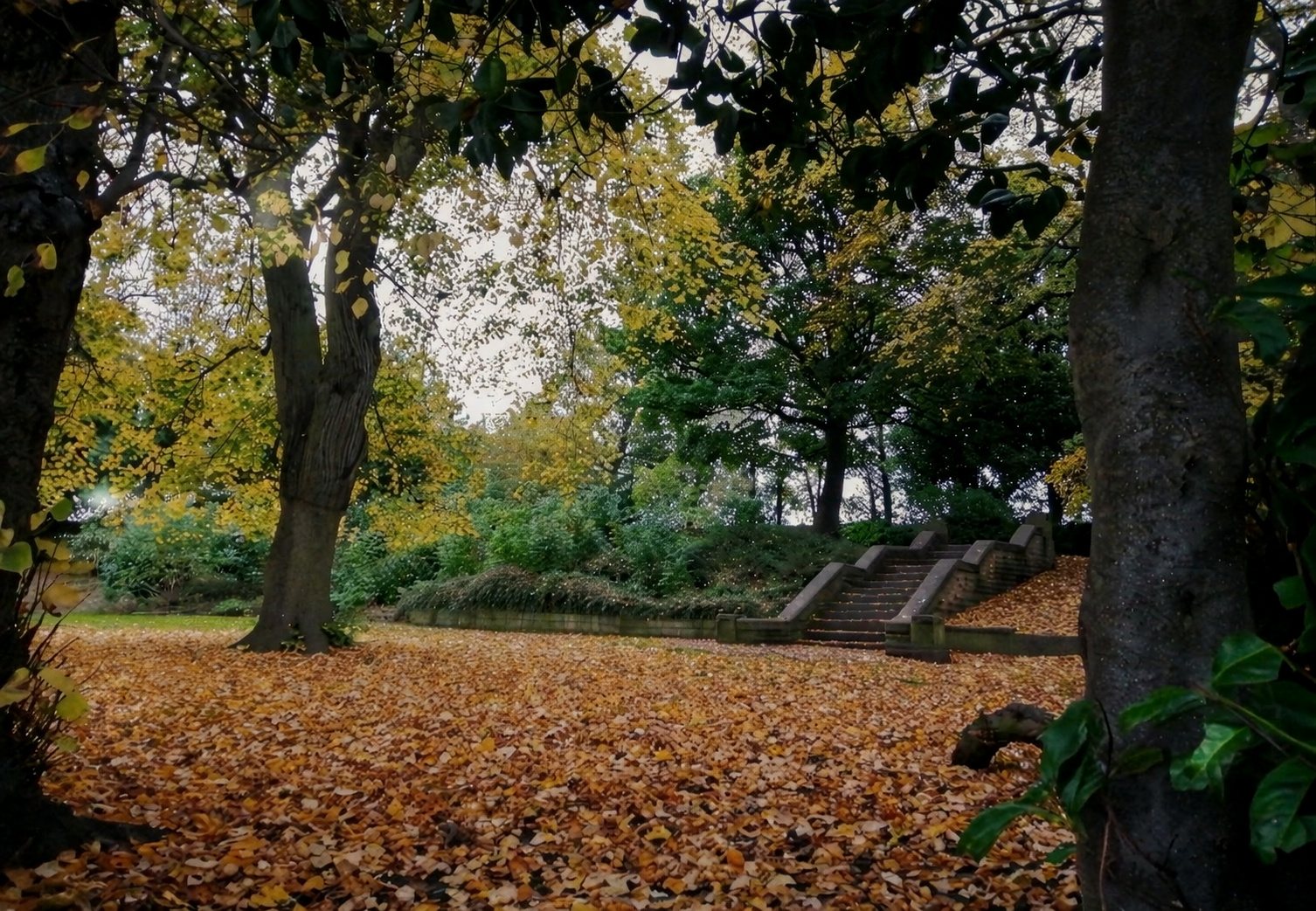
Today, Hassell Hall no longer stands. No visible structure marks its former presence.
The site is now part of Green Park, a public space that offers little indication of what once existed there.
And yet, something remains.
Not in stone.
Not in architecture.
But in the quiet continuity of memory.
At times, history survives not through grand monuments, but through fragments, inscriptions, documents, traces, that endure just enough to be rediscovered.
A broader question
The story of Ossett raises a wider question: how many histories like this remain undiscovered?
Across towns, cities and landscapes, there are countless lives that were never formally recorded, yet were essential to their time. Recovering these narratives does more than fill gaps; it reshapes our understanding of the past itself.
Projects such as FOSTER History & Collective Memory seek to engage with this space, not by elevating isolated anecdotes, but by recognising them as part of a broader, more inclusive historical record.
Beyond one place
What occurred in Ossett is not unique. It is representative.
Because, ultimately, history does not belong solely to those who were remembered, but also, and perhaps more importantly, to those who came close to being forgotten.
And it is in that fragile space, between memory and oblivion, that some of the most meaningful stories still wait to be told.
About the author
Ezequiel Foster is the founder of FOSTER History & Collective Memory, an initiative dedicated to uncovering and preserving overlooked historical narratives. His work explores the intersection of memory, identity and place, with a growing international focus on how cultural heritage can be meaningfully reconnected with contemporary audiences.